
After putting years into making and then distributing “America’s Family,” it has taken me time to rally for the next film. Moving across the country to care for family coupled with a reluctance to give my life to the obsession linked with artistic creation, has edged me towards avoidance. Like colds and street cats, however, the art that is yours to make eventually has its way with you. Sometimes it feels like discovering the dawn, mostly it just feels like fumbling through the dark.
My little animated sockeye from “Frances the Fish,” has been reborn as a Maine Atlantic salmon. Her journey is a now a bit broader, transforming into a LARS (think Jedi Master) over the course of her lifetime. To introduce you to our film protagonist, I’m sharing an excerpt from my talk with Ed Baum, fifty-seven year salmon scientist and deeply respected elder in the field.
Anike: What is the LARS and what got you interested in them?
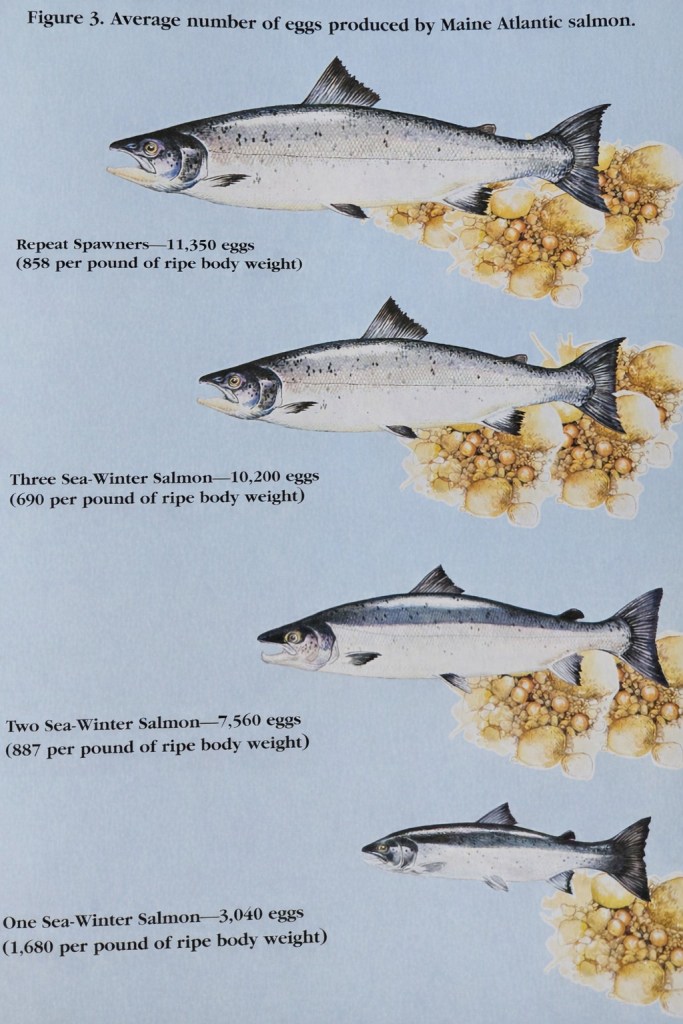
Ed: L.A.R.S stands for Long-absence repeat spawners. They stabilize and sustain wild salmon populations, are mostly female, produce many more and often higher quality eggs and carry traits linked to survival and return. One hundred fifty years ago or there were a lot more of them because the fresh water and oceans were more conducive to survival; no commercial or sport fisheries, no dams on rivers, no invasive species and a lot less human interference.
Anike: What does the journey of a LARS look like today?
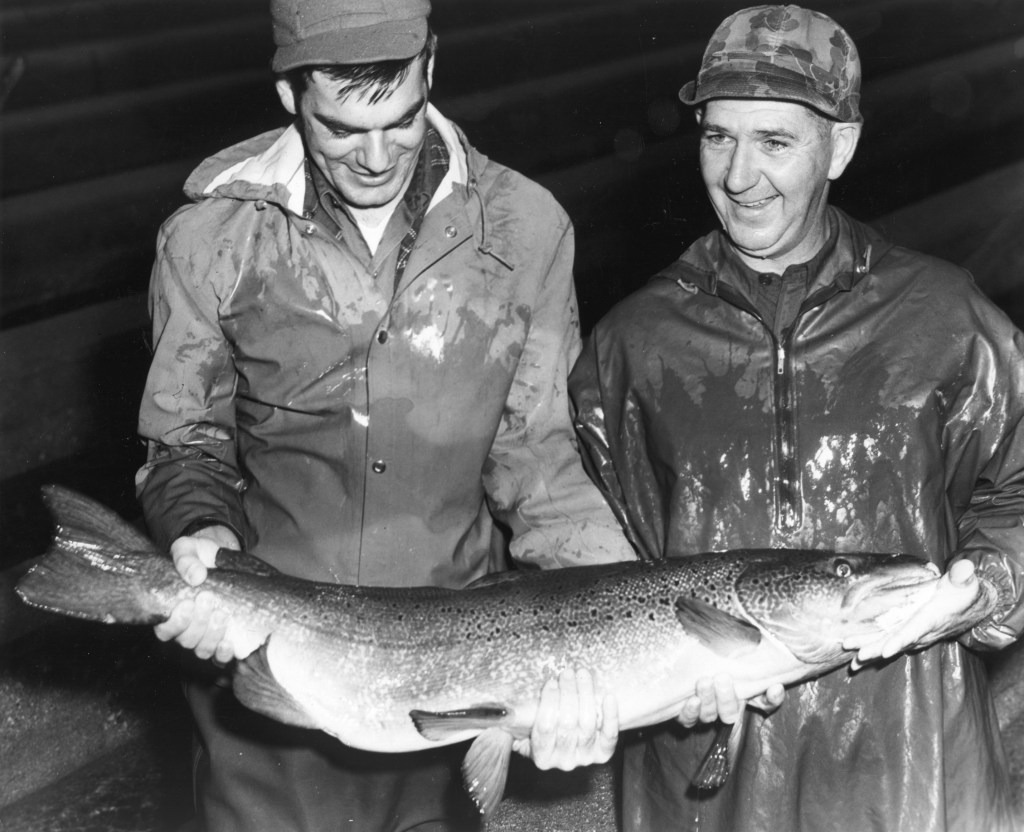
Ed: Most Atlantic salmon leave the river at two years old for the ocean. Then after two winters at sea, at seven to twelve pounds, they’ll head back to spawn. If they’re lucky enough to survive their first spawning trip, two years later they’ll return back to their home rivers again, now in the fifteen to twenty pound range. If they are really lucky they can do it again and come back home a third time. By this time they would be about nine and possibly twenty to thirty pounds.
Anike: That’s crazy! How could a salmon get as big as thirty pounds?
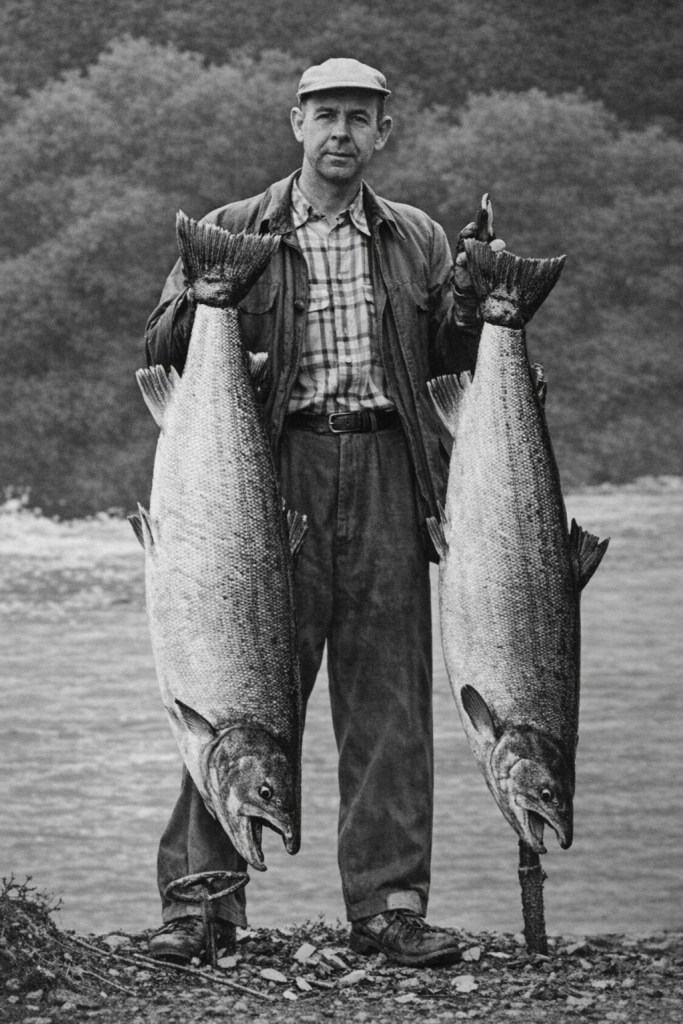
Ed: I’ve interviewed commercial fishermen who told me the stories their elders told them about catching sixty pound fish in the Penobscot. I believe those stories to be true.
Anike: Do LARS lead the Salmon pack?
Ed: They repeat the same spawning run they did their first time – because they already learned it – but they don’t function as leaders in a hierarchical way. Atlantic salmon migrate in groups but eventually spread out due to predators. Large and small fish arrive together.
Anike: What does it mean to say that a river without LARS is like a river without elders?
Ed:. 19th century LARS were 33% of the population, today they are less than 1%. Imagine if you took everyone over fifty years old out of our population, what would we know about anything?
Anike: You say that Maine’s wild Atlantic salmon are an image of human life, that while there is certainty in the spawning there is so much change, adaptation and uncertainty that exists as part of this life cycle. Are there any lessons they can teach us humans?
Ed: There may be a lesson about patience. For us, seventy years is a long time. For Atlantic salmon, it’s probably a very short time given that they have adapted over generations.
Anike: My movie will be for families. What do you hope they take away about salmon? Ed: I grew up going outdoors, learning how to hunt and fish from my Dad. Today, it’s so hard to compete with smart phones. It would be nice if the movie might get their attention, perhaps to see how all of us are connected to the same environment here on planet earth. Maine Atlantic salmon are the last remaining native Atlantic salmon in the USA, uniquely different from Canadian and European Atlantic salmon, both genetically and phenotypically. If we lose them they will be gone forever. And that would be a tragic loss.


